The Yoga Blossom program
A monthly, theme-based syllabus with weekly club sessions, home practice and rewards. It is designed to be fun for children and easy for schools to run.
Key highlights and features of the Yoga Blossom program
| No. | Features | Benefits to children |
|---|---|---|
| 1 |  Monthly theme-based practice | Monthly focused practice and worksheets improve each area of holistic development. Each month follows one meaningful theme, with age-appropriate practices for progressive development: asana for strength, flexibility, balance and body awareness; pranayama for breath awareness and healthy breathing habits; meditation and mindfulness for memory, concentration, attention and focus; and emotional wellness for self-awareness, calmness and emotional regulation. |
| 2 |  Home-practice worksheets | Simple, engaging worksheets help children cultivate a regular practice habit at home, and build consistency, discipline and healthy habits. |
| 3 |  Weekly home practice | Key practices are given as homework for children to practise at home. |
| 4 |  Yama and niyama through stories | Stories, activities and real-life situations help children understand and practise values such as kindness, truthfulness, contentment, discipline and self-awareness. |
| 5 |  Shloka chanting | Shlokas improve short-term memory and concentration. Age-appropriate yoga shlokas and Bhagavad Gita shlokas, learned through chanting and repetition, support listening, pronunciation, attention and recall, while connecting children with India's rich wisdom tradition. |
| 6 |  Child-friendly sessions | With games and activities designed for children to practise and enjoy yoga in a child-friendly format. |
| 7 |  Structured syllabus | With a structured syllabus and consistent practice, children understand yoga better. |
| 8 |  Rewards, recognition and assessments | Simple, age-appropriate assessments and Yoga Practice Rewards help children see their progress and stay motivated. Certificates and regular appreciation in class recognise consistent practice. The focus is progress, participation and regular practice, not competition. |
| 9 |  Affordable and multiple formats | Affordable for schools to have professionally trained Kids & Teens yoga instructors. |
| 10 |  A holistic lifestyle for a better future | Yoga Blossom goes beyond yoga poses to help children cultivate movement, breath, mindfulness, values, healthy habits and self-awareness. The aim is children who are physically active, mentally focused, emotionally balanced and positively connected with themselves and others. |
Bend, breathe, chant and meditate for a healthy and holistic lifestyle.
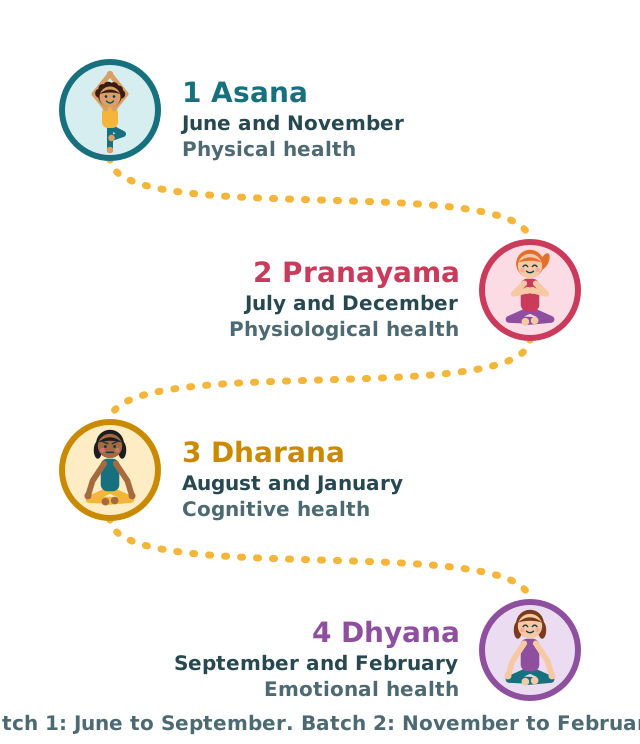
Two batches a year, a health theme every month
Your yoga practitioner conducts two batches each year: Batch 1 from June to September and Batch 2 from November to February.
- A holistic approach that supports physical, physiological and psychological development.
- Body, breath and mind development.
Month 1: Asana (Physical health)
June and November. Strength, flexibility, immunity and posture corrections, for a fit, healthy body.
Month 2: Pranayama (Physiological health)
July and December. Breathing, digestion and circulation, for better lungs and brains.
Month 3: Dharana (Cognitive health)
August and January. Memory, concentration and focus, building concentration.
Month 4: Dhyana (Emotional health)
September and February. Emotional regulation and balancing emotions like stress and anxiety, for single-pointed focus.
Benefits of a theme-based program

Skills get time to master
Children focus on one skill enough times to master it.

Whole-child development
Covers the overall holistic development of children.
Body, breath, mind and consciousness
Each theme benefits the body, breath and mind, and builds awareness.

Planned lessons
Instructors can prepare and deliver planned lessons.
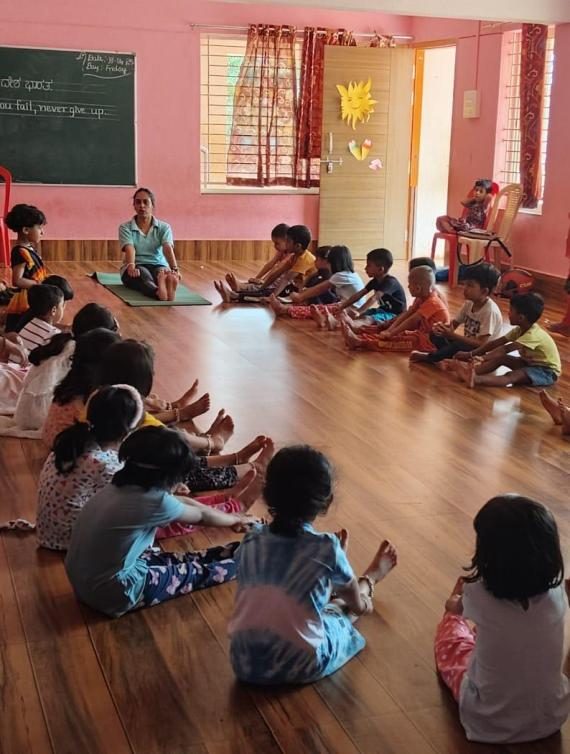
Yoga Club: interactive practice
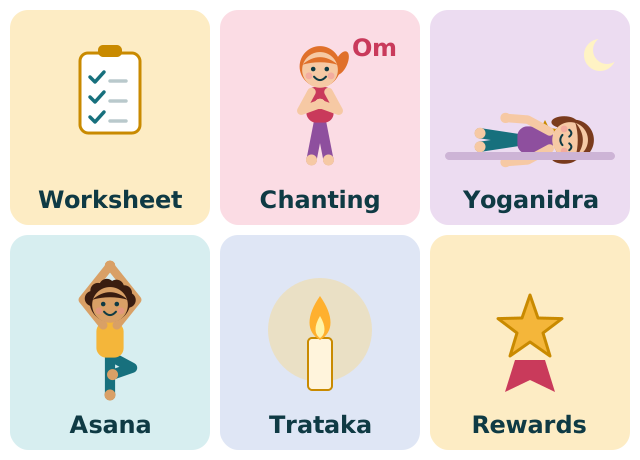
Every club session follows the same five steps, so children know what to expect.
- IntroYoga introduction. Today's yoga practice.
- Guided practiceInstructor-led practice. Asana adjustments, pranayama and meditation.
- Yoga jnanaChanting and knowledge sharing. Games and activities.
- Practised asanaIndividual practised asanas. Group show.
- Review and rewardFeedback. Reward.
Games and chants
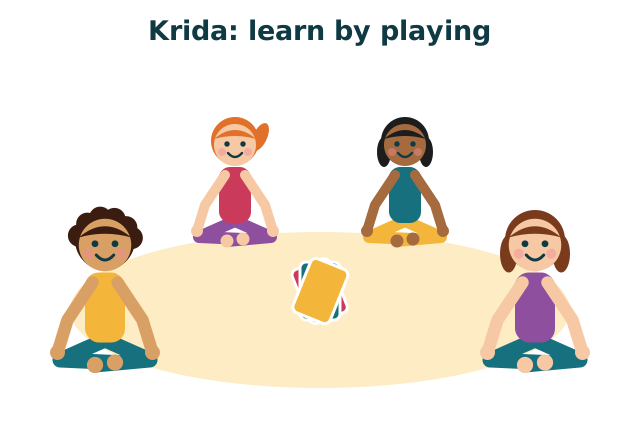
Krida (gamified) yoga
- A gamified way of learning.
- Learn by playing: stress-free practice.
Chanting (slokas)
- Practise frequently used slokas.
- Improve speaking skills and concentration.
ॐ असतो मा सद्गमय ।
तमसो मा ज्योतिर्गमय ।
मृत्योर्मा अमृतं गमय ।
ॐ शान्तिः शान्तिः शान्तिः ॥
Om. Asato Maa Sad-Gamaya | Tamaso Maa Jyotir-Gamaya | Mrtyor-Maa Amrtam Gamaya | Om Shaantih Shaantih Shaantih ||
Lead me from untruth to truth, from darkness to light, from death to immortality. Om, peace, peace, peace.
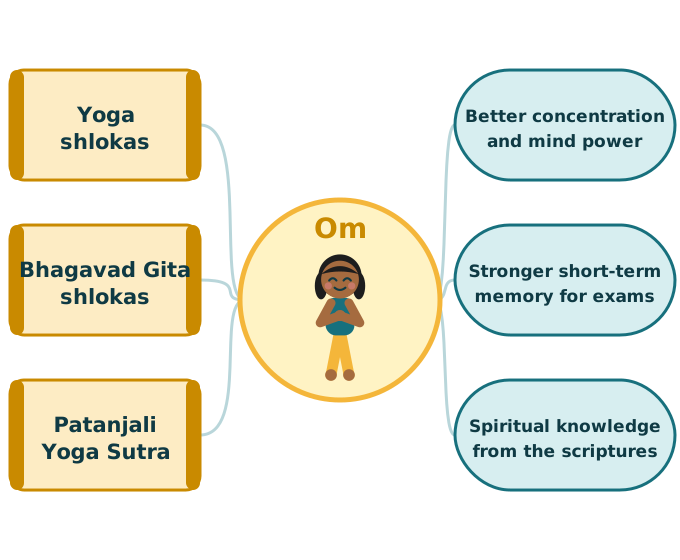
Chanting the shlokas
Children chant yoga shlokas, Bhagavad Gita shlokas and the Patanjali Yoga Sutra.
Benefits of shloka chanting
- Improved concentration and mind power.
- Enhanced short-term memory, which is very useful for exams and academic excellence.
- Spiritual knowledge from the scriptures.
A daily home practice, step by step
Every child gets a Home Yoga Practice Worksheet with the same simple sequence, so practice at home feels familiar. A Swadhyaya yoga practice diary helps children build the habit and record their assessments and practice experiences.
- Om chantingChant Om 3 times.
- ShlokaYoga Ganapati Mula Mantra: Om ham sam gam bhagavata nitya yoga yuktaya sachidanand rupine vinayakaya namaha.
- Joint loosening and warm-upsNeck, shoulders, waist, knees and ankles.
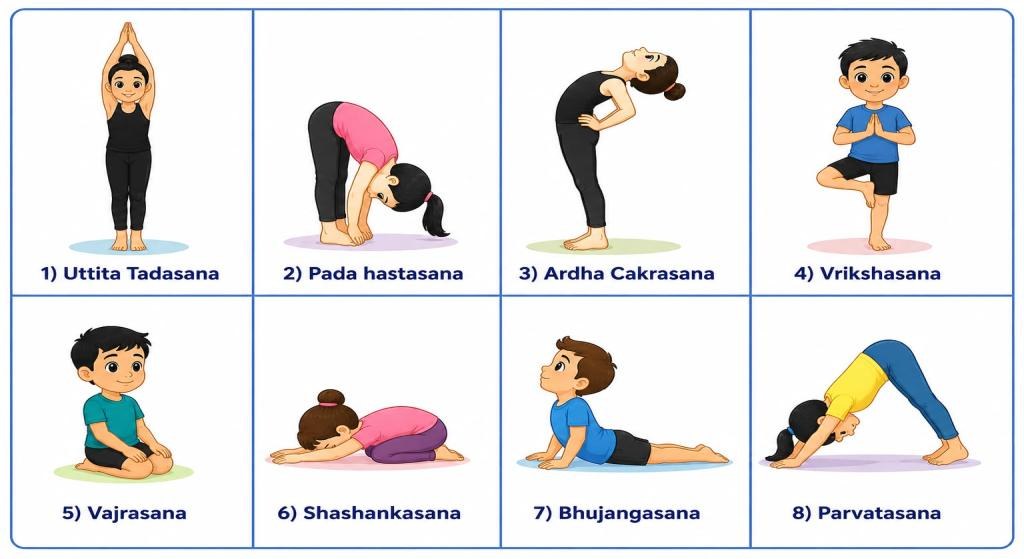
- AsanasEight postures, from standing and bending to seated and lying.
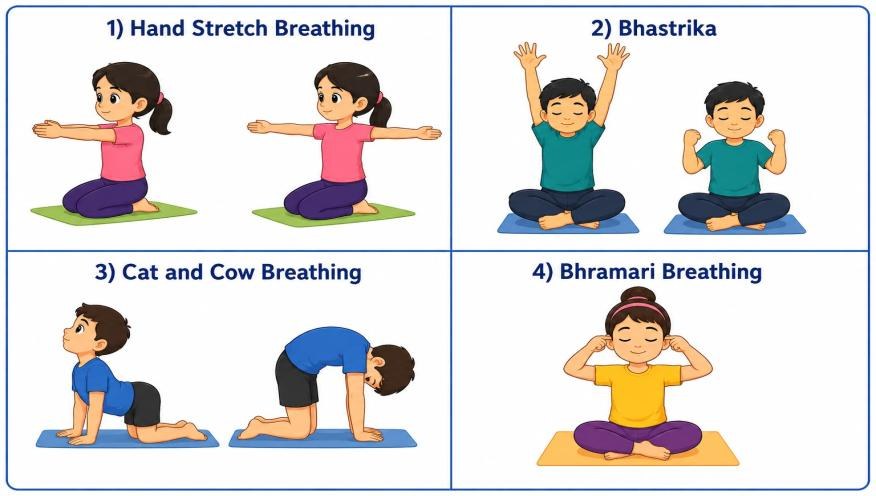
- PranayamaFour breathing practices: hand stretch breathing, bhastrika, cat and cow breathing, and bhramari.
- RelaxationFinish with Shavasana.
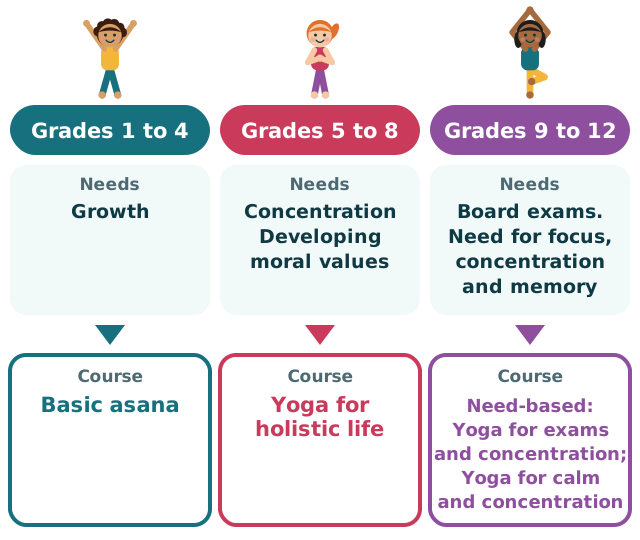
The needs of primary and high school students
Primary and high school students need different things, so the course is modular.
| Grade 1 – 4 | Grade 5 – 8 | Grade 9 – 12 | |
|---|---|---|---|
| Needs | Growth | Concentration; developing moral values | Board exams and need for focus, concentration and memory |
| Modular course | Basic asana | Yoga for holistic life | Need-based modular |
| Course focus | Growth | Concentration; developing moral values | Yoga for exams and concentration; yoga for calm and concentration |
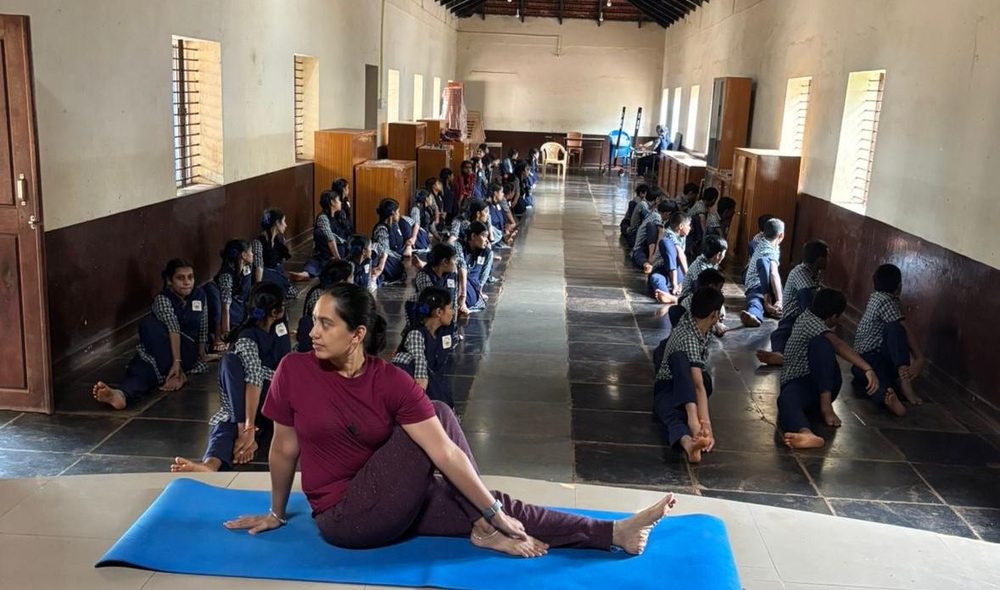
Kids & Teens Yoga vs Others
| Sr. No | Features | Kids & Teens Yoga | Others |
|---|---|---|---|
| 1 | Focus | Holistic overall development | Asana dominant |
| 2 | Mental well-being | ✓ Yes | ✗ No |
| 3 | Home practice worksheet | ✓ Yes | ✗ No |
| 4 | Regular assessment | ✓ Yes | ✗ No |
| 5 | Reward system for motivation | ✓ Yes | ✗ No |
| 6 | Well structured and children result oriented | ✓ Yes | May / No |
| 7 | Aligned to students' life | ✓ Yes | May / No |
| 8 | Engaging and interactive club format | ✓ Yes | May / No |
| 9 | Monthly workshop: Jala Neti, Trataka | ✓ Yes | ✗ No |
| 10 | Introduction to scripture | ✓ Yes | ✗ No |
Rewards for regular practice
Children earn recognition by counting Yoga Practice Days (YPD), with levels that get steadily more challenging.
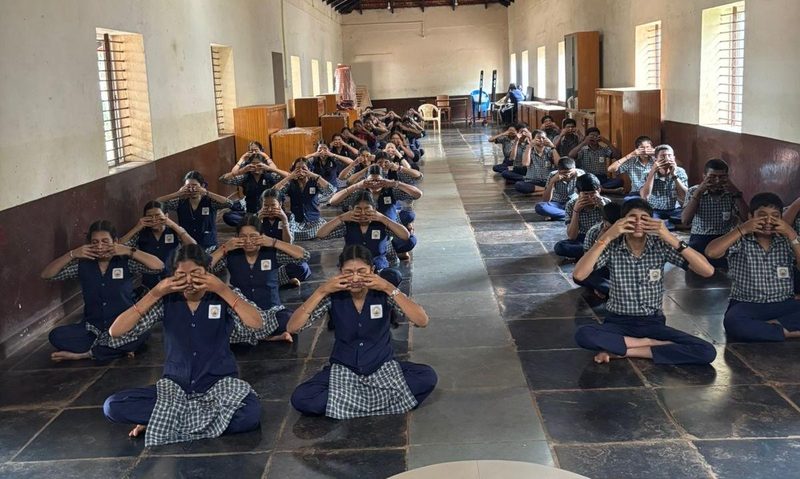
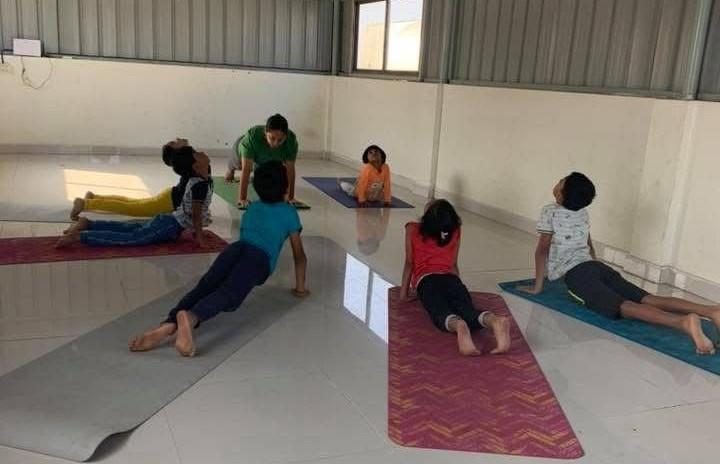
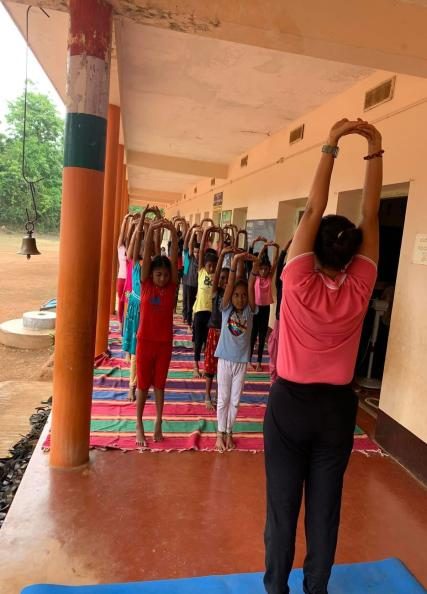
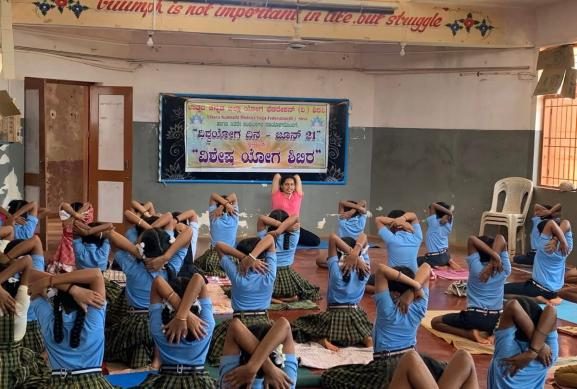
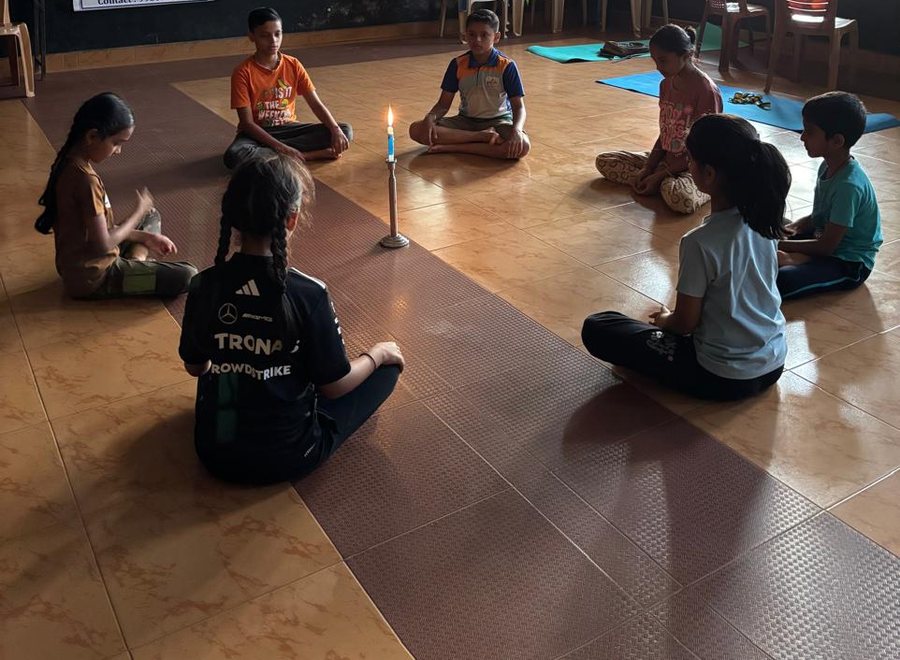
Pictures worth a thousand words
Bring Yoga Blossom to your child or school
Tell us the age group and the format you have in mind. We will reply on WhatsApp.
Chat on WhatsApp